You know your HR documents are scattered. You know your SharePoint is a "digital junk drawer." And you know the AI you're planning to deploy will be ineffective if it's fed poor data.
But where do you even start to get it all organized?
HR document management is no longer a luxury. It has become a strategic necessity: to handle audits, streamline your processes, prepare for the arrival of AI, and ensure GDPR compliance.
Yet many still confuse collaborative storage with true document management. An EDMS does far more than just archive: it structures, secures, tracks, and applies consistent rules. Above all, it frees your teams from relying on individual work habits.
This ebook provides the method to help you get there.
What you'll find inside:
1️⃣ Defining an HR classification scheme: the backbone of an EDMSWhy your shared drive isn't enough. How to structure your documents using a consistent, repeatable, and compliant business logic.
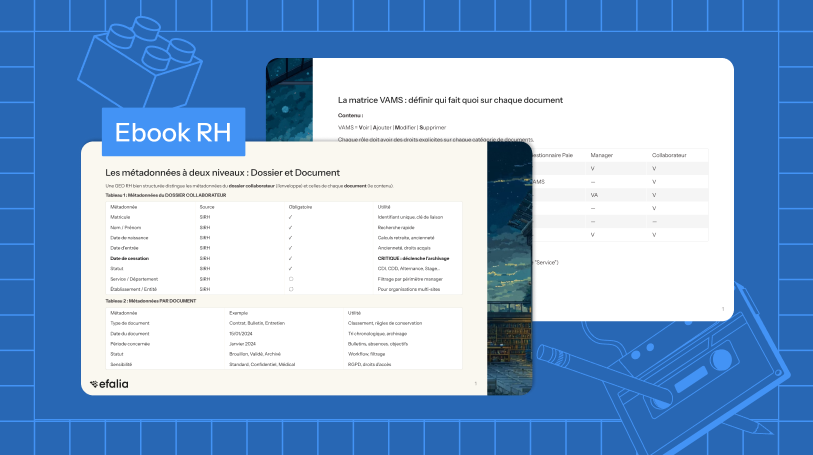
2️⃣ Indexing: making HR documents findable, usable, and interoperableMetadata, multi-criteria search, automatic pre-indexing: everything you need to ensure your documents never get lost in limbo again.
3️⃣ Mastering the HR document lifecycleFrom creation to secure deletion, including intermediate archiving: every HR document follows a regulated path. Here’s how to manage it.
4️⃣ HR document governance: stakeholders, roles, and responsibilitiesWho does what? Who approves? Who gets access? The CRUD matrix (Create, Read, Update, Delete) to define permissions without guesswork.
5️⃣ Summary & tips for launching an effective structureA checklist of the first 5 steps, maturity indicators, and best practices to get started without aiming for perfection right away.
Why read this ebook now?
Because structuring HR data means preparing for the future: automation, digitizing the employee journey, AI, GDPR compliance. It all starts with a well-organized document foundation.
32 pages. 5 chapters. Downloadable templates at the end of the ebook.Read it, understand it, put it into practice.