Enterprise RAG built on your DMS.
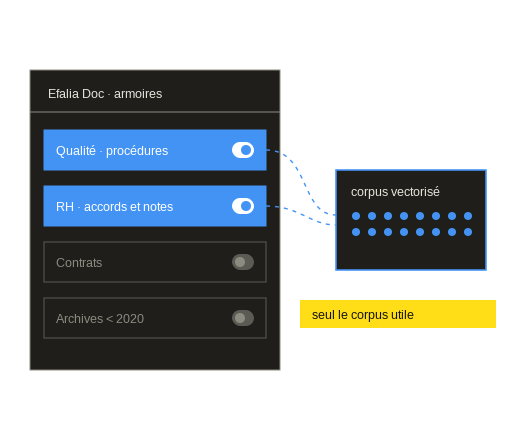
Your entire DMS answers your teams' questions, with sources to back them up. Semantic Memory prepares the documents you choose for the AI: a folder, a document type, or a specific time period. Every answer cites its sources, and users only see what they have permission to access.
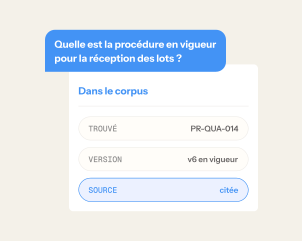
Get my corpus diagnosedWhat is the current procedure for receiving shipments?
Efalia Doc, the French DMS from Efalia · 40 years of experience · 2,800 client organizations




The RAG lived up to its demo.
Then it encountered your real documents.
The principle is simple: the AI searches your documents before answering. In a demo with twenty clean PDFs, it’s impressive. In production, three things happen.
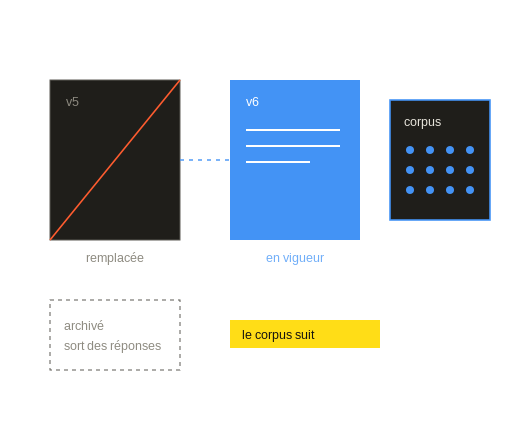
It answers using the 2019 procedure
We vectorized everything, including drafts, duplicates, and outdated versions.
Everyone reads everything
The vector database was built outside the DMS, without its permissions.
It costs more than expected
Vectorizing everything, re-vectorizing everything with every update, for documents that no one ever queries.
A RAG is only as good as the corpus you give it.
Yours is already in your DMS.
Semantic Memory is Efalia’s enterprise RAG: it vectorizes selected parts of an Efalia Doc DMS and makes them queryable by any MCP-compatible AI assistant, applying the DMS access rights to every response.
You decide what the AI learns.
It provides answers based on what you have selected.
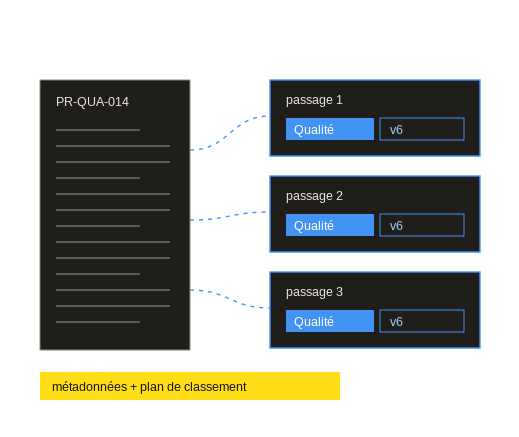
Prepare
Query
From your usual assistant
via Instant Memory, the DMS MCP server.
Across the entire prepared corpus
relevant passages filtered by user permissions.
With sources
and the link to each document.
Your filing system already does half the work.
Semantic Memory builds on it instead of rebuilding it.
What is an enterprise RAG?
RAG (retrieval-augmented generation) makes the AI search your documents before answering, instead of answering from memory. The quality of the answer therefore depends first on the quality of the documents found.
You validate the quality of the answers before going live.
Before opening the corpus, we build a golden set with you: real questions from your business, with the correct answer and the expected document. We measure, we adjust, we measure again.
Your questions, not a benchmark.
"How many days for a move?", not a generic test set.
A threshold set together.
We measure, we adjust, we measure again. The corpus goes live once the answers reach the threshold set with you, and not before.
The same test for every update.
New corpus, new model, or new settings: we run the same golden set again. Any discrepancy is spotted immediately, before your users see it.
of an ISO 27001 management system, approximately 60,000 words. Golden set results [to be provided]
Our consultants are familiar with our clients' filing systems, business lines, and documents. They prepare the corpus with you, train your administrators, and remain available as your usage grows.
Where does your corpus stand? In 30 minutes, a consultant will tell you what needs to be prepared and what is best left unvectorized.
Request my 30-minute demoThe entire company queries the DMS, not just those who file documents in it.
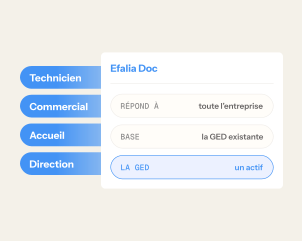
Any employee can query it from their assistant without needing to know the filing system or open the DMS. And everyone only receives what they are authorized to see: permissions are applied at every step, before the AI reads the content.
Have we already addressed a requirement for hosting in France?
Error code E42 on this model, what should I do?
What documents are required for a daycare spot?

For IT departments
A vectorized scope of your choosing, cost per scope, and no parallel vector database to secure.

For business departments
Query your document management system without needing to know the filing structure.

For management
The document management system you already maintain becomes an asset that serves the entire company.
A stable corpus, lots of questions: that’s where Semantic Memory thrives.
Need to calculate, compare, or get alerts on hundreds of contracts or tenders? That’s what Entity Memory is for.
See the range →Three ways to set up an enterprise RAG.
Your DMS already organizes your documents. With Semantic Memory, it makes them talk. Killing two birds with one stone.
Et quand vous voudrez aller plus loin.
Instant Memory branche vos IA sur votre GED. Deux mémoires complémentaires préparent vos documents pour des usages plus exigeants, et Instant s'y connecte de la même façon, toujours sous vos droits.
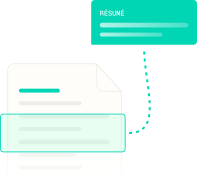
L'IA lit à la demande
Résumer un contrat, comparer deux devis, extraire les clauses d'un CCTP. Quelques documents traités à la volée, sans projet IA complet à monter.
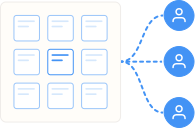
L'IA explore un corpus
Chatbot citoyen, FAQ interne, helpdesk technique, base de procédures qualité. Un corpus stable interrogé par beaucoup, avec un coût par requête maîtrisé.
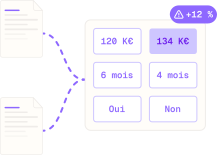
L'IA raisonne sur des données
Analyse d'appels d'offres, pilotage de conformité, veille contractuelle. Là où d'autres IA explorent du texte, Entity calcule, compare et alerte.
Le bon moment pour passer à la suite. Vous posez souvent les mêmes questions à beaucoup de documents ? C’est le moment de Semantic. Vous voulez des montants, des écarts, des alertes ? C’est Entity.
Your questions
What is an enterprise RAG?
Enterprise RAG (Retrieval-Augmented Generation) allows an AI to search through internal documents before providing an answer. Semantic Memory is Efalia’s enterprise RAG solution: it leverages documents from a DMS, respecting their versions and access rights.
Do you need a separate vector database?
No. Semantic Memory vectorizes the folders you select directly from the DMS: there is no parallel copy of your documents to secure or resynchronize. The vector database remains linked to the source of truth and its associated permissions.
Is Semantic Memory a chatbot?
No, it prepares the data; the question is asked within the assistant or agent of your choice. Efalia focuses on what ensures high-quality AI responses: well-selected, properly chunked, up-to-date, and permission-compliant documents.
Who chooses what gets vectorized?
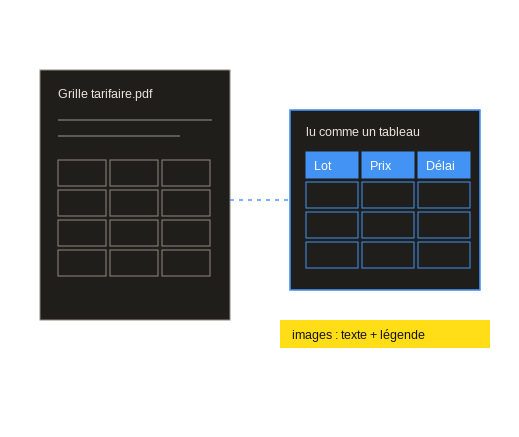
The DMS administrator. They select which folders to make searchable, decide how images and tables are handled, and manage chunking, embeddings, and maintenance. You retain full control over what the AI can read.
How are permissions applied to the answers?
Every passage retrieved for the AI is filtered based on the permissions of the person asking the question. Two employees can ask the same question and receive two different answers, each accurate according to what they are authorized to see.
What happens when a document changes?
The database follows your DMS: when a document is updated or removed, the change is reflected for the AI as well, according to the maintenance policy defined by the administrator.
How can I be sure the answers are reliable?
We measure it. Before going live, we work with you to build a golden set of questions based on your corpus to verify answer quality and track its evolution. Support is part of the process, not an optional add-on.
Instant or Semantic: which one should you choose?
Instant is for working on a few documents with no preparation required. Semantic is for querying an entire corpus to get more precise, faster, and more cost-effective answers at scale. Many start with Instant, then vectorize their most frequently accessed folders.
Get an answer in 30 minutes. A consultant will review a sample of your documents with you, and you will leave with a clear plan of what to prepare before connecting an AI.
What happens next. A consultant will contact you to schedule a time and let you know which documents to prepare.
- versions, duplicates, tables, and permissions reviewed on a sample
- what is best left unvectorized
- an initial scope estimate
Place the landing page demo form here, then delete this text.